
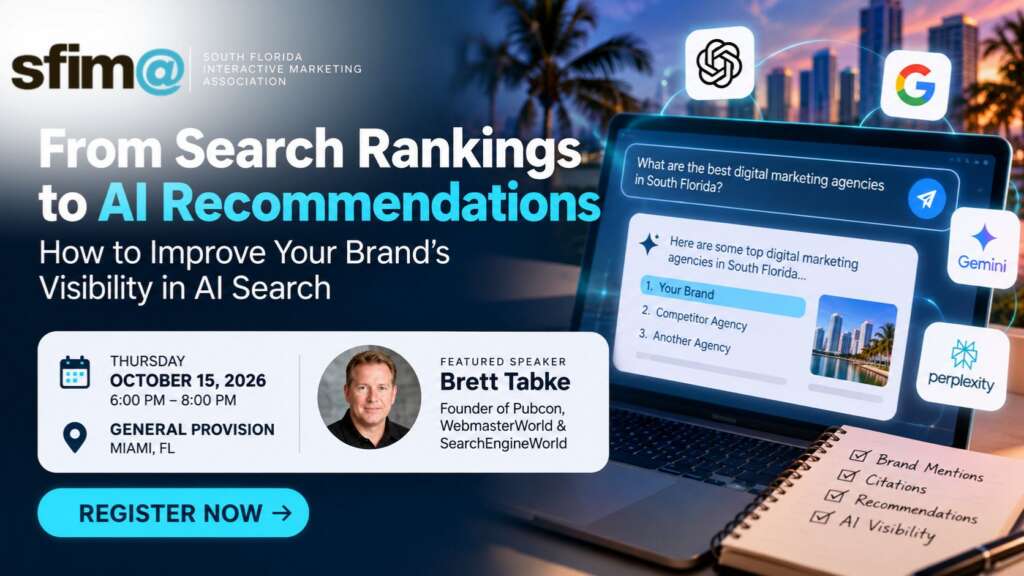
SEO is changing. Is your brand keeping up?
For years, digital marketers have focused on one primary goal: getting their brands to the top of Google’s search results. But with artificial intelligence transforming how consumers discover businesses, products, and services, showing up on page one is no longer the only measure of success.
Today, consumers are turning to AI-powered platforms like ChatGPT, Google AI Overviews, Gemini, and Perplexity to research products, compare businesses, and make purchasing decisions. Instead of clicking through multiple websites, they’re receiving direct answers, summaries, and personalized recommendations.
That raises an important question for marketers: Is your brand part of the conversation when AI generates an answer?
As highlighted in a recent Adobe article on improving brand visibility in AI search engines, businesses need to rethink how they measure online visibility and develop strategies that go beyond traditional search rankings.
The Shift From Traditional SEO to AI Search Visibility
Traditional search engine optimization (SEO) focuses on improving website rankings for specific keywords. While SEO remains essential, AI-powered search introduces an additional challenge.
Imagine a consumer searching for “the best digital marketing agencies in South Florida.”
In traditional search, the user receives a list of websites and chooses which ones to visit.
In AI search, the platform may generate a response recommending several agencies, explaining their strengths, and identifying which businesses best match the user’s needs.
The difference is significant.
A company could rank well in Google search results but still be missing from AI-generated recommendations.
This shift has introduced two increasingly important concepts into the digital marketing world:
- Generative Engine Optimization (GEO): Improving content and a brand’s digital presence to increase visibility in AI-generated responses.
- Answer Engine Optimization (AEO): Structuring content to provide clear, relevant answers to questions users ask search engines and AI assistants.
Both approaches build on traditional SEO while placing greater emphasis on authority, clarity, credibility, and how information is presented.
Why AI Search Visibility Matters for Brands
Consumers increasingly expect search platforms to do more than provide links. They want recommendations, comparisons, and direct answers.
According to Adobe, AI search visibility can be evaluated through three important signals:
1. Brand Mentions
Does an AI platform mention your company when someone asks a question related to your industry?
For example, if someone asks ChatGPT to recommend local marketing agencies, does your business appear in the response?
2. Citations and Sources
Does an AI-generated answer reference your website, research, articles, or other content as a source?
Being cited can help position your brand as a useful resource and create opportunities for referral traffic.
3. Brand Recommendations
Is your company actively recommended when users compare products, services, or providers?
This is especially important because AI-generated recommendations can influence purchasing decisions before a consumer ever visits a website.
For marketers, these signals are becoming important additions to traditional metrics like keyword rankings, impressions, clicks, and organic traffic.
Five Ways to Improve Your Brand’s Visibility in AI Search
The good news is that marketers don’t have to abandon their existing SEO strategies. Instead, they should expand them to account for how AI systems discover, interpret, and reference information.
1. Create Content That Answers Real Questions
AI-powered search is conversational.
Instead of typing “South Florida SEO agency,” consumers might ask, “Which South Florida marketing agencies specialize in SEO and paid media for small businesses?”
Your content should reflect these natural-language questions.
Develop blog posts, FAQ sections, service pages, and educational resources that directly address customer needs. Clear headlines, concise answers, and well-organized information help make content easier to understand and reference.
2. Strengthen Your Brand’s Online Authority
AI platforms may draw on information from multiple sources when developing responses.
That means your brand’s visibility extends beyond its own website.
Earned media coverage, reputable business directories, industry publications, customer reviews, and expert contributions can all help reinforce your brand’s digital credibility.
Consistency also matters. Make sure your business name, services, expertise, and positioning are clearly communicated across your online presence.
3. Make Your Website Easy to Understand
Technical SEO continues to play an important role in AI visibility.
A website with logical headings, clear navigation, accessible content, descriptive page titles, and appropriate structured data is easier for search engines and compatible AI retrieval systems to interpret.
Marketers should also review whether important website content is accessible to relevant crawlers.
The objective is straightforward: Make it easy for search and AI systems to understand who you are, what you offer, and why your information is relevant.
4. Track Your Competitors in AI Search
Traditional SEO tools help marketers understand where competitors rank.
AI visibility measurement adds another layer.
Try asking multiple AI platforms industry-specific questions and record which brands appear in the responses.
Look for patterns:
- Which competitors are mentioned most frequently?
- What websites are being cited?
- What makes certain brands more visible?
- Is your company missing from important recommendations?
- How do responses change across platforms?
Because AI responses can vary based on the prompt, location, and timing, consistent testing is more useful than relying on a single search.
5. Measure AI Visibility Alongside Business Results
Measuring AI visibility requires more than counting mentions.
Marketers should also evaluate citation frequency, competitive share of voice, AI referral traffic, and changes in how AI platforms describe their brands.
Most importantly, connect those findings to meaningful business results whenever possible.
Are AI referrals generating qualified website visitors? Are those visitors converting? Is stronger brand visibility contributing to increased interest in your products or services?
The goal isn’t simply to appear in more AI answers. It’s to turn visibility into business opportunities.
Take the Next Step With SFIMA: From Rankings to Recommendations
Understanding AI search is one thing. Knowing how to measure and improve your brand’s visibility is another.
That’s why the South Florida Interactive Marketing Association (SFIMA) is bringing digital marketers together for an upcoming educational event:
From Rankings to Recommendations: How to Measure & Improve AI Visibility
Join SFIMA on Thursday, October 15, 2026, for an in-depth discussion led by Brett Tabke, founder of Pubcon, WebmasterWorld, and SearchEngineWorld, and a longtime leader in the SEO industry.
This session will explore the practical side of AI Optimization (AIO) and GEO, helping marketers understand how AI engines see their brands and what they can do to influence those results.
Attendees will learn how to:
- Measure brand visibility across ChatGPT, Google AI Overviews, Gemini, Perplexity, and other AI platforms.
- Track brand mentions, citations, recommendations, and competitor visibility.
- Identify content, authority, and information gaps that may be limiting AI visibility.
- Use strategic content improvements to address inaccurate or incomplete AI-generated responses.
- Leverage AI tools to analyze SEO data, identify opportunities, and automate reporting.
- Build an actionable AI visibility strategy that complements traditional SEO.
Whether you’re an SEO specialist, agency professional, marketing director, or business owner, this session will provide practical insights into the next evolution of digital discovery.
Event Details
Date: Thursday, October 15, 2026
Time: 6:00 PM – 8:00 PM
Location: General Provision
Speaker: Brett Tabke, Founder of Pubcon
Agenda:
- 6:00 PM – 6:45 PM: Networking
- 6:45 PM – 7:45 PM: Presentation
- 7:45 PM – 8:00 PM: Q&A
Registration:
- SFIMA Members: FREE
- Non-Members and Guests: $25
The $25 ticket fee can also be applied toward an SFIMA membership.