
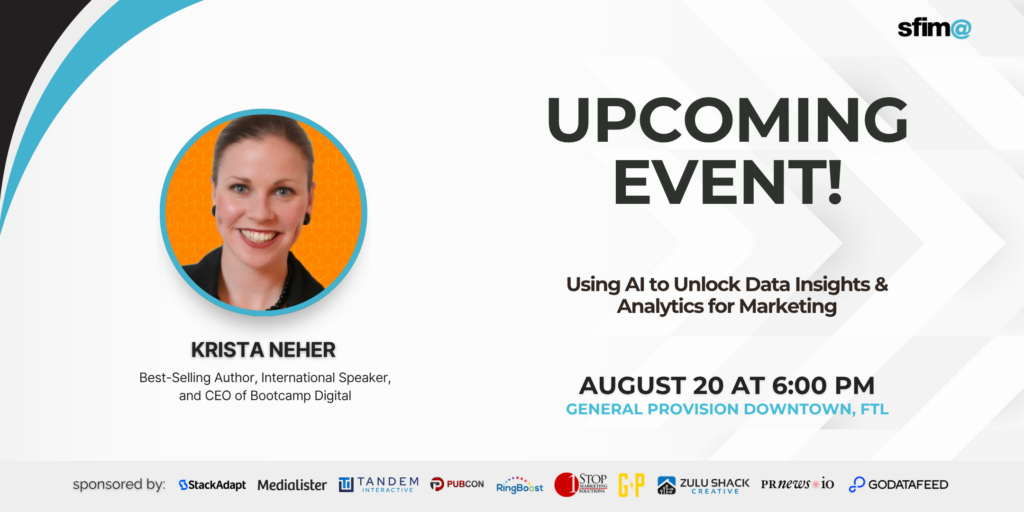
Short Summary: AI marketing training now goes well beyond writing better prompts. At a recent SFIMA event, Krista Neher of Bootcamp Digital showed South Florida marketers how to connect AI tools directly to their SEMrush, Google Analytics, and Google Drive accounts so the tools can analyze real campaign data on their own.
Krista Neher, founder of Bootcamp Digital, took the stage at a SFIMA event and showed a packed room of digital marketers, CMOs, and small business owners how AI actually performs when you feed it real campaign data instead of generic prompts. She has trained teams at Nike, Meta, and Procter and Gamble over a twenty year career, and she spent the evening walking through live examples on her own laptop rather than a slide deck. The result gave SFIMA members a look at where AI marketing training needs to go next: fewer prompts memorized from a blog post, more systems built around your own numbers.
What You Should Know Before You Start Using AI for Marketing
Do I need to be technical to get value from AI marketing training?
- No. Neher pointed out during the SFIMA event that most people already use the same handful of chat based tools, whether that is Claude, ChatGPT, or Copilot.
- The skill that matters is knowing how to set up a task, not knowing how to code.
- Treat the AI like a new employee you are training, not a search engine you are querying.
Will AI replace my need for a strategist or an SEO specialist?
- No, and this came up more than once during the SFIMA event’s question and answer session.
- AI can carry you through data and analysis with strong accuracy, but the action step still needs a human who understands the business.
- Someone still has to decide whether the AI’s idea is actually a good one for your brand.
Is my company data safe if I connect it to an AI tool?
- Uploaded files and connected accounts stay inside your own instance of the tool and do not train the underlying model.
- Connectors only see what your own login can already see, so permission settings on Google Drive or Dropbox still matter.
- Set clear expectations with clients before you connect their reports to any AI tool.
What is the fastest way to get better results from AI on marketing data?
- Give the tool an intuitive file name, tab names, and column headers before you ask it anything.
- Ask it directly what it sees in your data and how it understands each tab before you request an analysis.
- Build a project instead of one long chat thread, and load your historical reports into it every month.
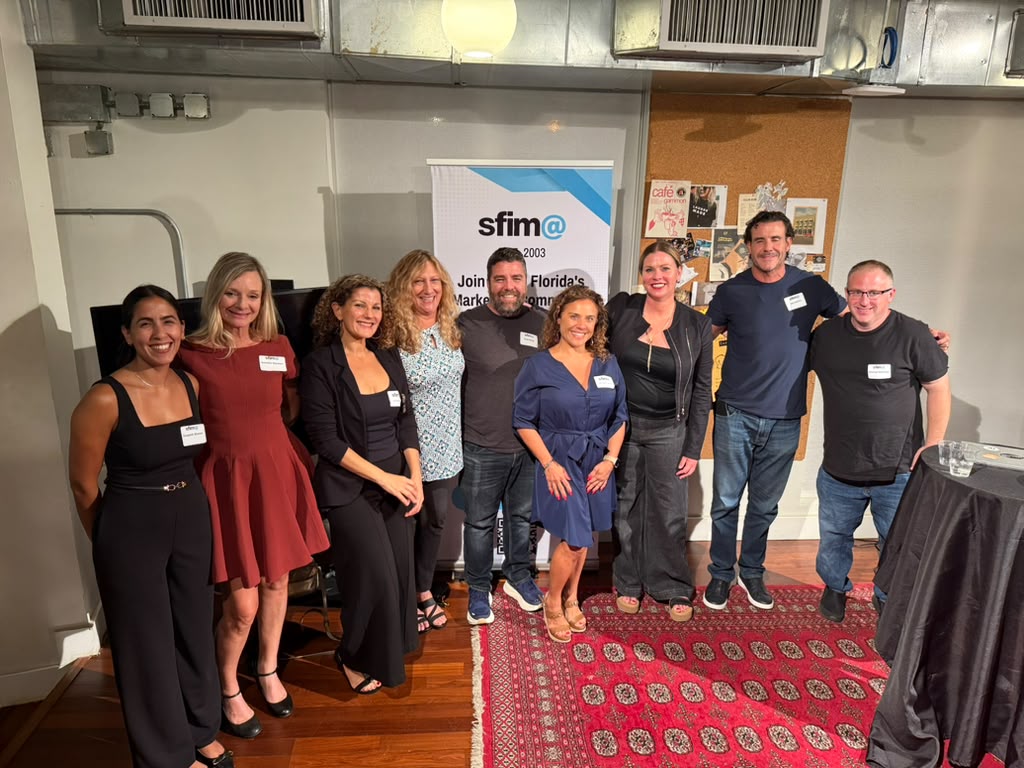
The room full of digital marketers, CMOs, and small business owners at this SFIMA event left with a working system, not just a list of tools to try. That is the difference between a webinar and the kind of AI marketing training SFIMA builds its calendar around: real screens, real data, real questions from people doing this work every day.
61%
of marketers now use AI for data analysis, media planning, or personalization
82%
of marketers say AI tools have improved their productivity
Sources: Clutch, December 2025; Emplifi State of Social Media Marketing, November 2025
Table of Contents
- Why AI Marketing Training Is the New Competitive Edge for South Florida Marketers
- What Krista Neher Taught at This SFIMA Event on Using AI for Marketing Data
- Three Rules for Using AI for Marketing Data Without the Guesswork
- From Data to Action: How AI Marketing Training Turns Numbers Into Strategy
- Connectors, Projects, and Client Data: What to Know Before You Connect Your Tools
- Why Marketing Events in Florida Like SFIMA Matter More Than Ever
- What to Expect From SFIMA Marketing Events This Year
- Why SFIMA Is the Home for AI Marketing Training in South Florida
1/5: Why AI Marketing Training Is the New Competitive Edge for South Florida Marketers
Every marketer in South Florida already sat through a presentation about AI this year. Krista Neher said as much herself at this SFIMA event, and the room laughed because it rang true. But the presentations most people sat through covered ideas, not execution. Neher split the topic into two separate skills that AI marketing training has to cover: coming up with ideas for what AI can do, and knowing how to actually set up the task so the tool gives you a usable answer.
- Most primary chat based tools, including Claude, ChatGPT, and Copilot, share similar core features once you get past the interface.
- The advantage goes to whoever knows how to structure a task, not whoever owns the fanciest subscription.
- Data and insights rank among the categories where AI performs at its strongest right now, according to Neher, compared to areas like brand accurate image generation where results still fall short.
💡 Pro Tip: Stop treating your AI tool like a search bar. Give it context the way you would with a new hire on day one: what the file contains, what the business does, and what a good answer looks like.
2/5: What Krista Neher Taught at This SFIMA Event on Using AI for Marketing Data
The audience at this SFIMA event included small business owners and marketing professionals who use spreadsheets every day and rarely trust a tool to think for them. Neher opened with a bold claim: most people will stop opening Excel altogether within a year or two, because a spreadsheet only ever served as an interface to information, and AI now handles that interface better than a person clicking through a pivot table.
She then opened her own AI account live for the room and showed how connecting company data through Google Drive and an SEO tool changed the quality of every answer. With almost no direction beyond a request for a keyword strategy, the tool pulled the company’s actual audience, content priorities, and keyword tiers straight from connected files. Neher called it a preview of where AI marketing training is heading: less prompt writing, more setup work done once and reused constantly.
Krista Neher
LinkedIn Profile“Don’t outsource your thinking to AI and don’t think AI is smarter than you. Those are the two biggest user mistakes I see.”

3/5: Three Rules for Using AI for Marketing Data Without the Guesswork
- Verify against the source.
- Ask about assumptions and bias.
- Start fresh instead of stretching one long thread.
Krista Neher gave the SFIMA crowd a short checklist for anyone about to upload a spreadsheet to an AI tool. Skip these steps and you get vague, generic answers. Follow them and you get analysis that actually reflects your numbers.
Checklist for using AI for marketing data:
- ✔ Name your file, your tabs, your columns, and your rows so the intent reads clearly.
- ✔ Ask the tool what it sees in your data and how it understands it before you request any analysis.
- ✔ Ask it to verify every number against the source file when the stakes are high.
- ✔ Ask if it made any assumptions, and where it might be wrong, before you trust the output.
- ✔ Start a fresh project or thread for recurring tasks instead of one long running chat.
Watch Out: Long chat threads quietly lose track of your earlier instructions. Neher compared it to a coworker who nailed a task on day one and starts cutting corners weeks into the same conversation. The tool has not gotten worse. It is just no longer holding every detail from a conversation that has grown too long, and large files behave the same way once they grow past a certain size.
4/5: From Data to Action: How AI Marketing Training Turns Numbers Into Strategy
The most useful part of Neher’s talk for marketing professionals came when she walked through an SEO analysis built from a connected SEMrush account. The tool pulled traffic numbers, flagged the single blog post driving over half the site’s traffic, and then proposed five specific ways to grow that number further, none of which Neher had suggested herself.
- AI carries most of the weight in data and analysis, handling roughly 80 to 90 percent of that work well, according to Neher.
- Insight generation lands closer to 70 percent, since it lacks full business context.
- Turning insight into action drops closer to 60 percent, which is exactly where a strategist earns their spot.
She also warned marketing professionals about a real limitation: AI tends to repeat the most common advice already sitting on page one of a search engine unless you point it at your own account data. Generic prompts get generic answers. Connected accounts get answers built around your actual business.
Krista Neher
LinkedIn Profile“The historical data is the number one thing that makes your information meaningful.”
5/5: Connectors, Projects, and Client Data: What to Know Before You Connect Your Tools
Agency owners in the room asked the question everyone was thinking about: what happens to client data once you connect it? Neher addressed it directly, and her answer matters for anyone handling proprietary accounts.
- Uploaded files and connected accounts do not train the underlying AI model, no matter which tool you use.
- A connector can only see what your own login already has permission to see, so Google Drive or Dropbox permission settings still control your exposure.
- For agencies managing several clients, Neher recommended separate projects for each client rather than one shared connector, with historical reports uploaded directly into each project’s context.
- Projects also solve the truncation problem from long chat threads, since each one holds instructions and files specific to a single account or client.
Good to Know: A project built around a single client, with their strategy notes in the instructions and their monthly reports in the context, produces sharper answers than one long generic chat thread ever will. The historical data becomes the benchmark for every new report you upload.
What to Expect From SFIMA Marketing Events This Year
SFIMA runs its events on the third Thursday of nearly every month at General Provisions, and the calendar ahead keeps the AI marketing training conversation going.
- September 17: Peter Shankman brings his digital PR background to the stage for the next SFIMA event.
- October 15: an Ask the Experts agency panel opens the floor to audience questions.
- November 19: a visual storytelling focused session, with details to come.
- December: the annual SFIMA holiday party returns to the same venue as last year.
SFIMA also keeps a running archive of past sessions worth a look, including a Google Analytics 4 recap with Alan Knecht and an earlier Facebook Ads Accelerator session with Krista Neher, both on the SFIMA blog.
Ready to see this kind of AI marketing training live?
Frequently Asked Questions About AI Marketing Training and SFIMA
What is SFIMA?
SFIMA stands for the South Florida Internet Marketing Association. The organization runs monthly educational events and networking opportunities for digital marketers, CMOs, and business owners across the Tri County area, and it added AI marketing training to its regular event lineup this year.
Who is Krista Neher?
Krista Neher is a six time best selling author, award winning entrepreneur, and CEO of Bootcamp Digital, with twenty years of digital marketing experience predating the term itself. She has worked with organizations including Meta, Google, Procter and Gamble, NASA, and the US Army, and she has appeared in The Wall Street Journal, Forbes, and CNN.
Do I need a paid AI subscription to follow this kind of AI marketing training?
No. The core techniques Neher covered, like naming your files clearly and asking the tool to verify its own work, apply to free versions of Claude, ChatGPT, or Copilot. Paid tiers add connectors and higher usage limits, which help once you start automating recurring reports.
How much does SFIMA membership cost?
Student membership runs $49 a year, and individual membership runs $99 a year. Both include free access to SFIMA’s monthly educational events, which is where most of this AI marketing training content gets delivered live.
Can AI replace my SEO specialist or marketing strategist?
No. AI handles data retrieval and analysis at a high level, but it still needs a person who understands the brand and the market to judge whether an idea makes sense to act on. Neher was direct about this at the SFIMA event, and it lines up with wider industry data showing most marketers view AI as a productivity boost rather than a replacement for judgment.
Is it safe to connect client data to an AI tool?
Connected data stays inside your own account and does not train the underlying model. That said, agencies should still talk with clients about sensitive data, and should set up separate projects per client rather than one shared connector across multiple accounts.
What other marketing events in Florida does SFIMA run besides this one?
SFIMA runs events on the third Thursday of nearly every month, covering topics from SEO and PPC to social media and now AI marketing training. Upcoming sessions include a talk from Peter Shankman, an Ask the Experts agency panel, and the annual December holiday party.
How do I join SFIMA or attend an event?
Membership and single event tickets are both available through SFIMA’s event page. Members attend monthly educational events for free as part of their membership, and single event tickets remain available for anyone who wants to try one out first.
Whether you run a marketing team of one or manage accounts for a dozen clients, this kind of AI marketing training only works when you can ask questions in real time and watch someone run the tools live, which is exactly what SFIMA’s next event delivers.